Co-Designing Patient Facing Machine Learning for Prenatal Stress Reduction
Feb. 2023 - Present
Stress during pregnancy can have lasting impacts on maternal health, pregnancy outcomes, and child development across the lifespan. Next-day prenatal stress prediction algorithms have recently been developed, inferring personal moments of stress before they afflict the pregnant person and their child. However, for these machine learning (ML) algorithms, and the Just-in-Time Adaptive Interventions (JITAIs) leveraging them, to better align with pregnant people's needs and goals, we must engage pregnant people in defining system requirements.
I designed and applied a participatory design method to co-design patient-facing ML systems. In the context of my preliminary study, I applied this method with 20 pregnant people to dicuss the use of ML within JITAIs for prenatal stress management. My goal for this method is to facilitate diolgue and co-creation between research teams and laypersons, such as pregnant people and patients more broadly.
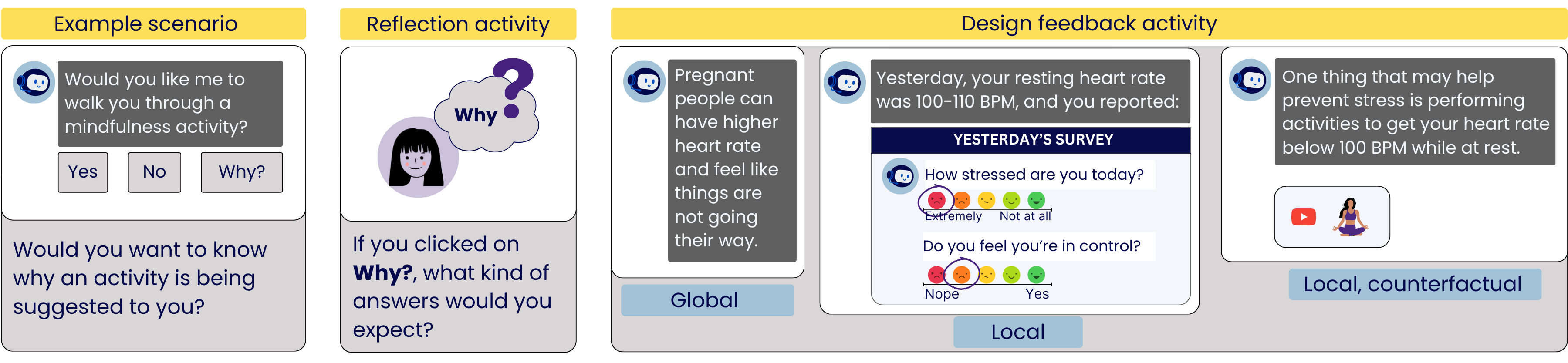
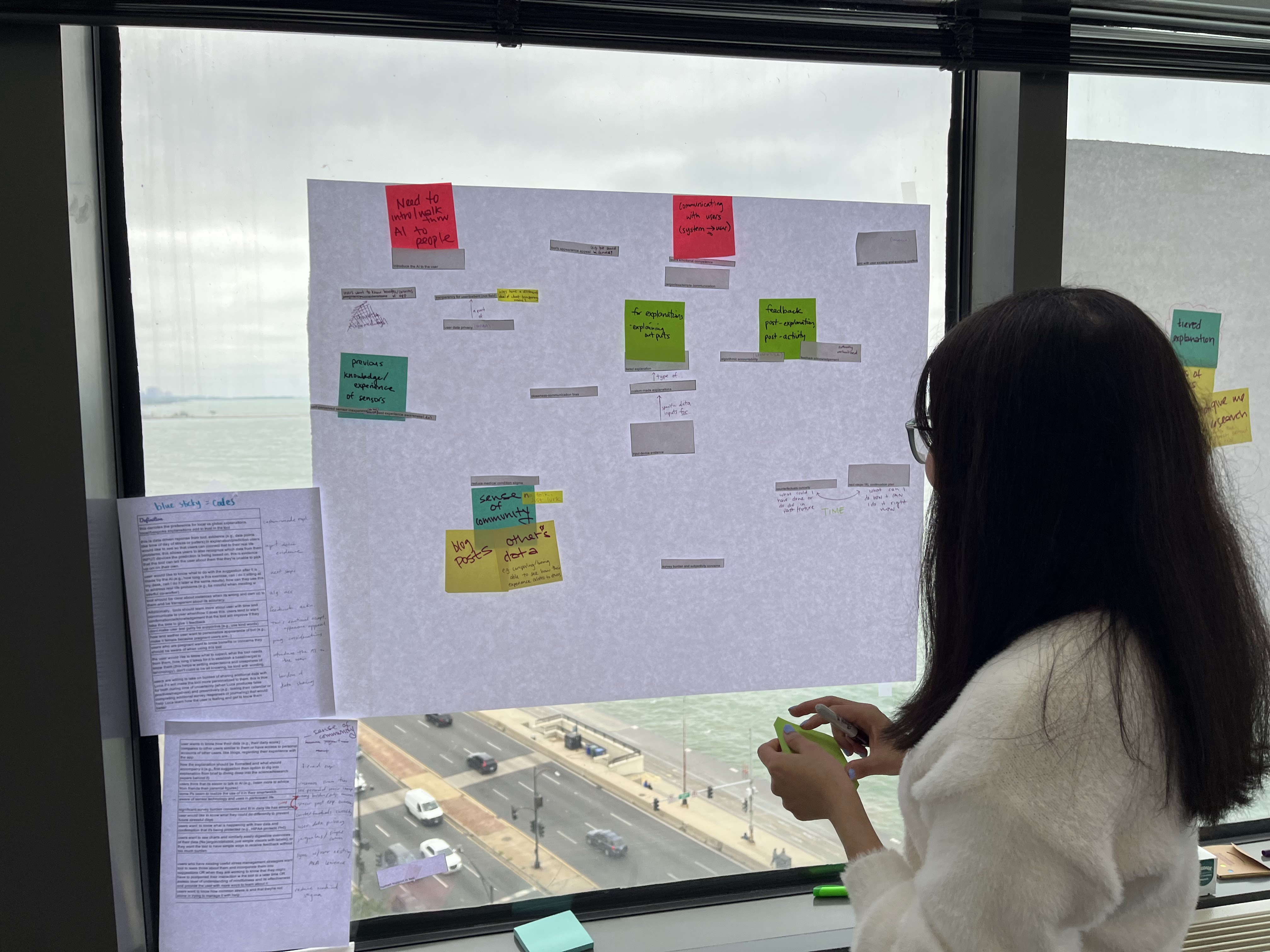
Using design sessions that combined reflection and design feedback activities, I found that participants were interested in using ML-driven JITAI that (1) fit into their daily life by offering flexible engagement, (2) supported them in building a mental model of the underlying JITAI functionality, (3) differentiated between non-adherence and non-compliance, and (4) illustrated apparent reciprocal learning.
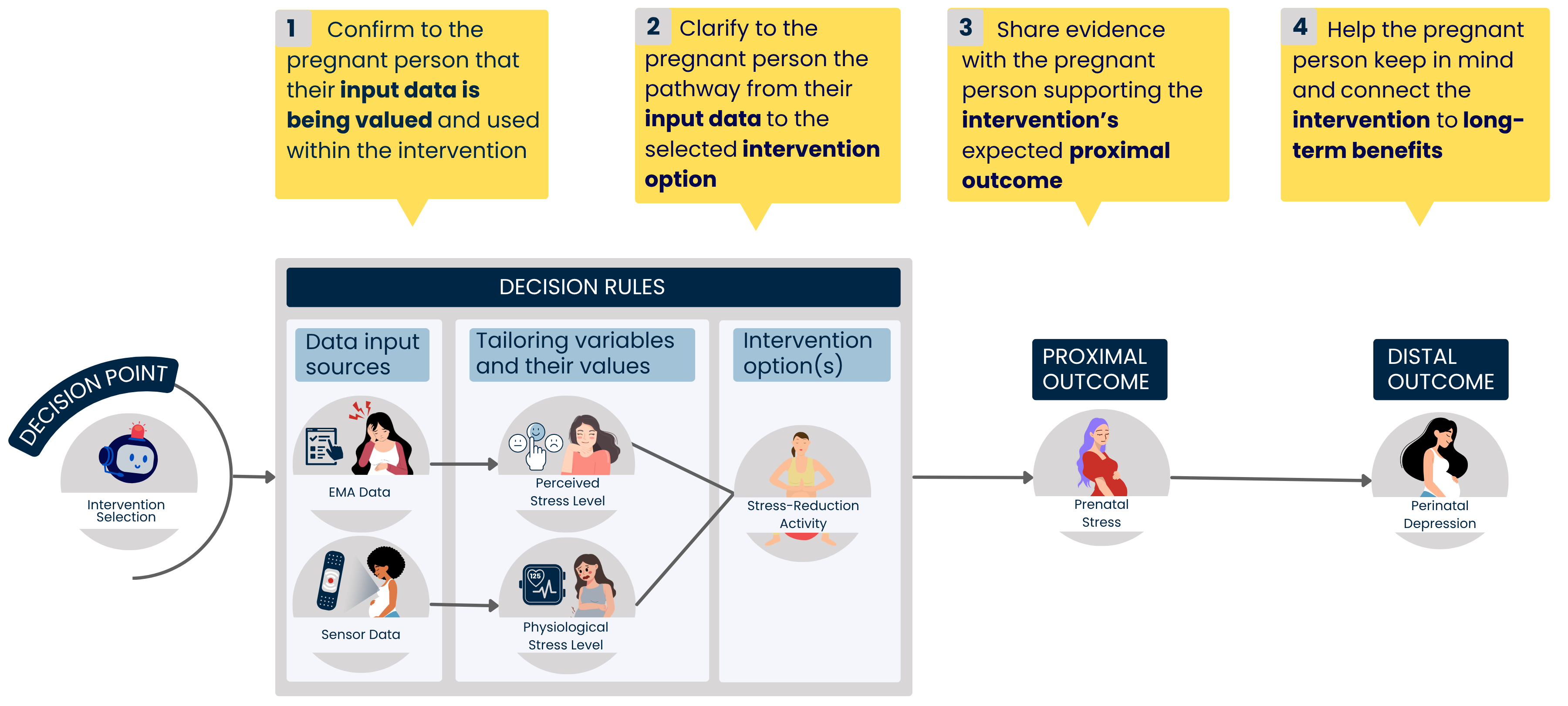
I am currently creating design requirements needed to increase the transparency of JITAIs, developing a prototype, and formulating evaluation method for these designs in the wild.
The first paper on this work (“I Don't Like Being Told Just What to Do; I Need to Know Why”: Patient Expectations of Machine Learning-Driven JITAIs for Prenatal Stress Management) has been accepted to ACM Health, under the Special Issue on Human Centered Computing in Healthcare. I will present it at the inaugural ACM Interactive Health conference. 🌸